

Why Play Is the Best Way for Children to Learn
Play is not a break from learning — it is how young children make sense of the world. Here is why we build our days around it.
What is really happening during play
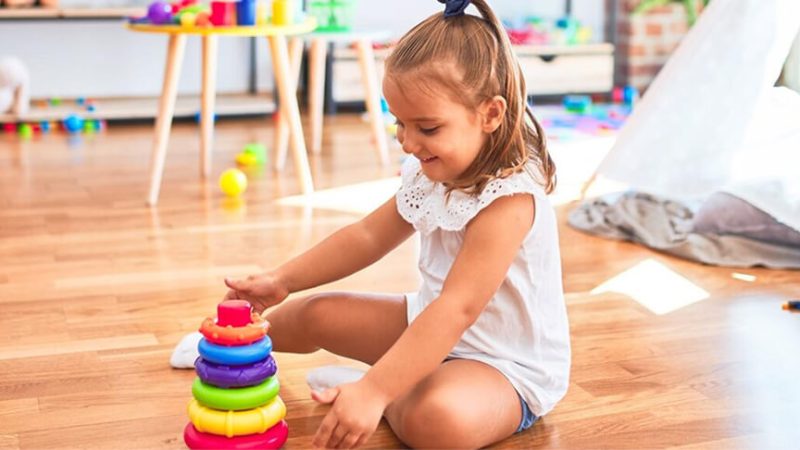
Watch a three-year-old build a tower and you are watching a great deal more than blocks going up. They are testing balance, predicting what will happen, coping with the frustration when it falls, and deciding whether to try again. That loop — try, notice, adjust, try again — is the foundation of every kind of learning that follows.
Young children learn through their hands and their whole bodies long before they learn through instruction. A child who has poured water between jugs a hundred times arrives at volume and capacity with a head start no worksheet can give them.
The skills play quietly builds
- Language. Pretend play produces far richer talk than answering questions does. Children reach for new words when they need them to explain a game.
- Early maths. Sorting, stacking, comparing and repeating patterns are mathematical thinking in its earliest form.
- Problem solving. Every collapsed tower and jammed puzzle piece is a small, safe problem to work through.
- Self-regulation. Waiting for a turn, following the rules of a game and managing disappointment all build the control children need for school.
- Confidence. Choosing what to do, and seeing it through, teaches a child that their ideas are worth having.
Play is the work of childhood. When a child is deep in a game, they are concentrating harder and for longer than at almost any other moment in their day.
Purposeful play is not the same as free-for-all
Play-based does not mean children are simply left to it. Our teachers set out the room with intent, join in when it will stretch the play, and step back when it will not. A water tray becomes a lesson in floating and sinking because someone thought carefully about what to put in it that morning.
The skill is in the timing. Interrupt too soon and the play collapses; wait too long and the moment passes. That judgement is what qualified early-years teachers bring to a room full of busy children.
How to support it at home
- Leave unhurried gaps in the day. Deep play needs a run-up, and it rarely happens in ten-minute slots.
- Offer fewer toys, rotated more often. Too much choice tends to shorten play rather than extend it.
- Narrate rather than direct — “you are making that one really tall” invites more than “put the red one on top”.
- Let the mess stand where you can. Packing away a half-built world ends the thinking behind it.
Our teachers weave this into every day at kindergarten. Book a visit to see it in action.
Recent Posts

Building Kindness and Friendship in Early Years
 July 16, 2026
Healthy Snacks Little Ones Actually Love
July 16, 2026

The Magic of Reading Aloud to Young Children
July 16, 2026
Leave Comment